
Circular economy practices are gaining traction as businesses seek smarter, more sustainable ways to operate. The concept of a circular economy offers a powerful framework for reducing waste, improving resource efficiency, and extending product life cycles. This approach not only supports environmental goals but also fuels innovation, enhances brand value, and contributes to long-term profitability.
The concept of a circular economy is transforming how businesses approach sustainability. In this guide, we explore how companies can contribute to circular systems by redesigning processes, reducing waste, and rethinking resource use for a more sustainable future.
What is a circular economy?
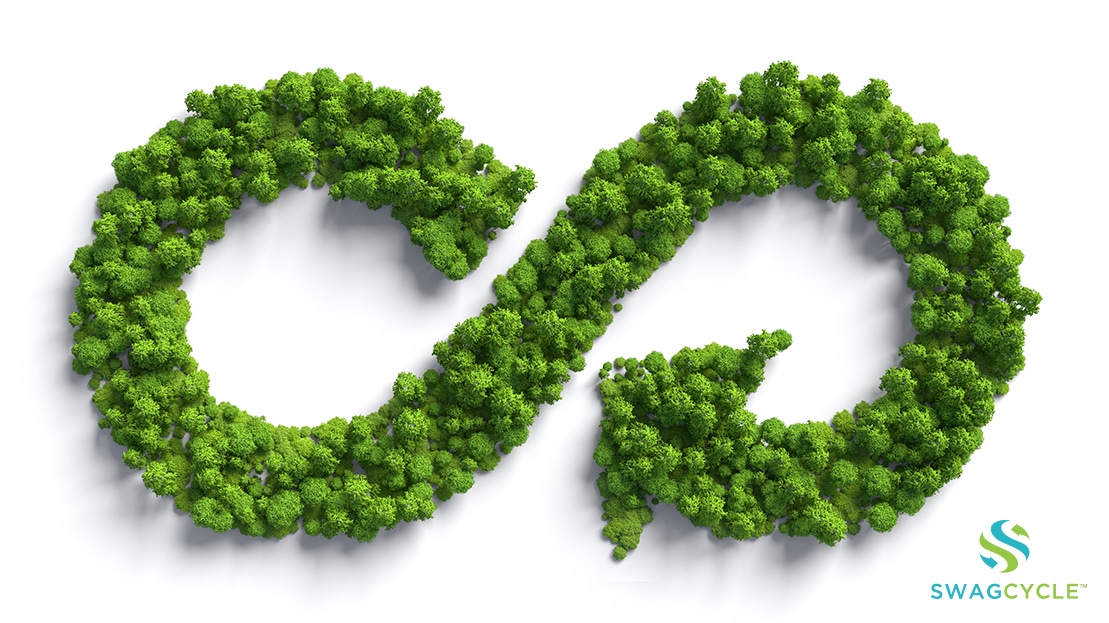
In the linear economy model – which dominates our global supply chain – raw materials are processed, used, and discarded as waste. In contrast to this ‘take-make-waste’ model, a circular economy is a system where materials and products never become waste. They are built to last and are kept in circulation through processes like repair, reuse, refurbishment, remanufacture, recycling, and composting.
Regenerative by design, a circular economy aims to decouple growth from the consumption of finite resources and to grow prosperity, jobs, and resilience while cutting greenhouse gas emissions, waste, and pollution. Circular economy practices are also good for business – they can shrink a company’s environmental footprint, trim its operational waste, and allow it to use resources more efficiently.
To transform our current take-make-waste system to a circular one, we must change how we manage resources, make and use products, and handle those products after use.
How Companies Can Create Sustainable Systems?
Companies are critical in the shift from our current throwaway system to a circular economy and can play a vital role in creating sustainable systems by shifting their practices and repurposing their waste and resources.
Top 5 Tips to Implement Circular Economy Practices
1. Evaluate your current practices
Start by taking a look at your current practices and determining areas where waste can be reduced or resources can be conserved. Identify opportunities for improvement, and set achievable goals and targets that can minimize waste while improving business performance.
2. Design products for circularity that are built to last
Focus on creating products that are durable, repairable, and made from renewable or recycled materials. This will allow for easy repurposing and recycling at the end of their lifecycle, reducing waste and saving resources.
3. Develop new strategies for reusing, reducing and recycling
By developing and implementing strategies focused on reusing, reducing, recycling, and creatively repurposing, your company can minimize waste and reduce its environmental footprint while also lowering costs.
4. Share your values with customers
Use your commitment to sustainability and support for circular economy practices as a unique selling point to internal and external stakeholders. Highlight this commitment in communications with your customers and share how they can help contribute to sustainability. Embracing circular practices can enhance brand image and customer loyalty as consumers seek more sustainable products.
5. Seek collaboration with organizations that share your sustainability values
Align your business with partners, suppliers, and service providers who also prioritize sustainability and waste minimization. This can involve choosing suppliers who use recyclable materials or partnering with organizations that share your values and offer sustainable solutions. By partnering with such organizations, you can maximize the social and environmental impact of your efforts.
Services like SwagCycle can be valuable allies in your company’s efforts to implement circular economy initiatives, offering expertise in sustainable solutions that amplify your impact.
Does your company have obsolete branded merchandise you’d like to keep from becoming waste while having your products matched with a good cause? Learn more about us, how SwagCycle can help your company or organization repurpose, recycle, and donate your branded merchandise.
FAQs
1. What exactly is the circular economy, and how does it work?
The circular economy is a new way of thinking about how we make and use things. Instead of the usual “make, use, throw away” approach, it aims to keep products, materials, and resources in use for as long as possible—by repairing, reusing, recycling, and redesigning. This helps reduce waste and saves resources.
2. Is the circular economy only for big companies, or can regular people be part of it too?
Everyone can take part! While businesses play a big role in designing products and systems, individuals can contribute by choosing to repair instead of replace, buying second-hand, recycling properly, and supporting sustainable brands.
3. Can a circular economy really reduce climate change?
Definitely. By using materials more efficiently and producing less waste, we lower the energy needed to extract and process raw materials—one of the biggest contributors to greenhouse gas emissions. It’s a powerful way to cut carbon footprints.
4. Are circular economy products more expensive?
Sometimes they can cost a bit more upfront, especially if they’re designed to last longer or made from recycled materials. But in the long run, they often save money because you don’t have to replace them as often. Plus, more circular options are becoming affordable as demand grows.